Time Log – Teams (Other Teams’ Sites)
Date: Feb. 25, 2026 From: 04:15pm To: 05:05pm
Date: Feb. 25, 2026 From: 06:30pm To: 07:20pm
Date: Feb. 26, 2026 From: 08:00pm To: 08:50pm
Date: Feb. 26, 2026 From: 09:00pm To: 09:40pm
Time Log – Students (Other Students’ Sites)
Date: Feb. 25, 2026 From: 05:15pm To: 05:45pm
Date: Feb. 25, 2026 From: 07:30pm To: 08:05pm
Date: Feb. 26, 2026 From: 08:55pm To: 09:25pm
Date: Feb. 26, 2026 From: 09:45pm To: 10:20pm
Essay I. Summary of Activities and New Contents Created
This week, I focused on integrating conversion-centric analytics implementation using Google Tag Manager and GA4, while also expanding my site’s content strategy with two new technology and lifestyle-focused blog posts. I created and published two new articles designed to engage a broader audience beyond technical web analytics topics. The first post, “How Mobile Apps Are Quietly Shaping Our Daily Habits,” explores how mobile applications influence productivity, mental health, and behavioral patterns through data-driven personalization and algorithmic design. The second post, “The Rise of Digital Minimalism: Living Smart in a Hyperconnected World,” examines how individuals can use technology intentionally while maintaining balance in an increasingly connected digital environment. Both posts include properly cited external references in MLA style and are optimized for search visibility and reader engagement.
Essay II. Summary of “Thank You” Event Conversion
This week, I implemented a conversion-centric tracking structure in GA4 by creating a dedicated “Thank You” page and configuring it as a key event (conversion). First, I created a standalone “Thank You” page in WordPress to serve as a confirmation endpoint for user actions. Then, within GA4, I created a new event named thank_you_page using the “Create without code” option, triggered when the page_view event contained the URL parameter thank-you. This event was marked as a key event to ensure it is tracked as a conversion in GA4 reporting. I verified the implementation using Debug View, where both the page_view and thank_you_page events fired successfully in real time. This implementation reflects a conversion-centric measurement strategy because it allows meaningful user actions to be quantified and analyzed rather than relying solely on traffic metrics. By isolating and tracking confirmation-page visits as conversions, I can evaluate how effectively site content drives user completion behavior and measure performance across acquisition channels and engagement reports.
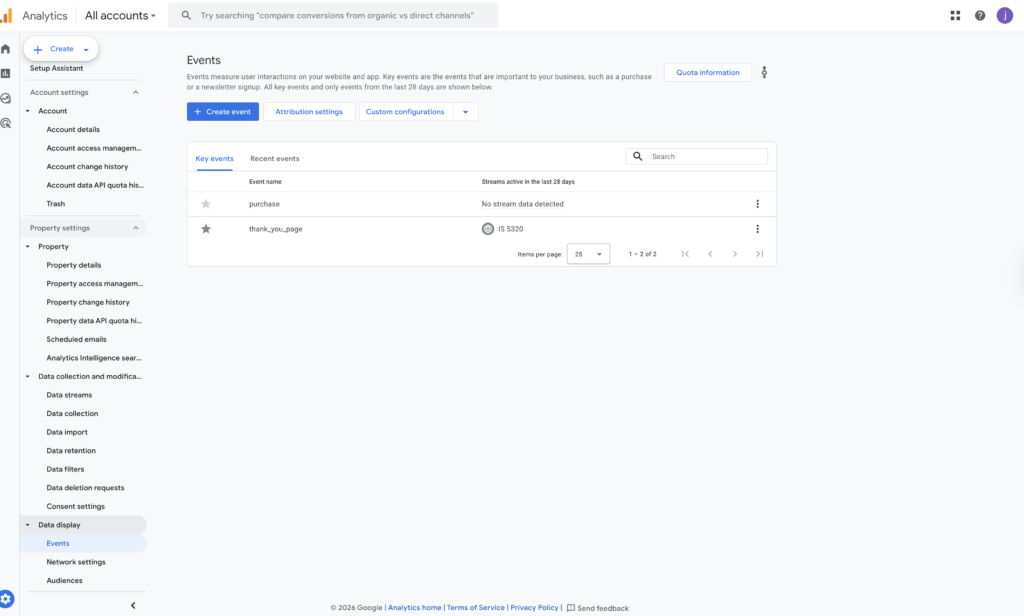
Figure 1. GA4 Key Event Configuration – Thank You Page Conversion
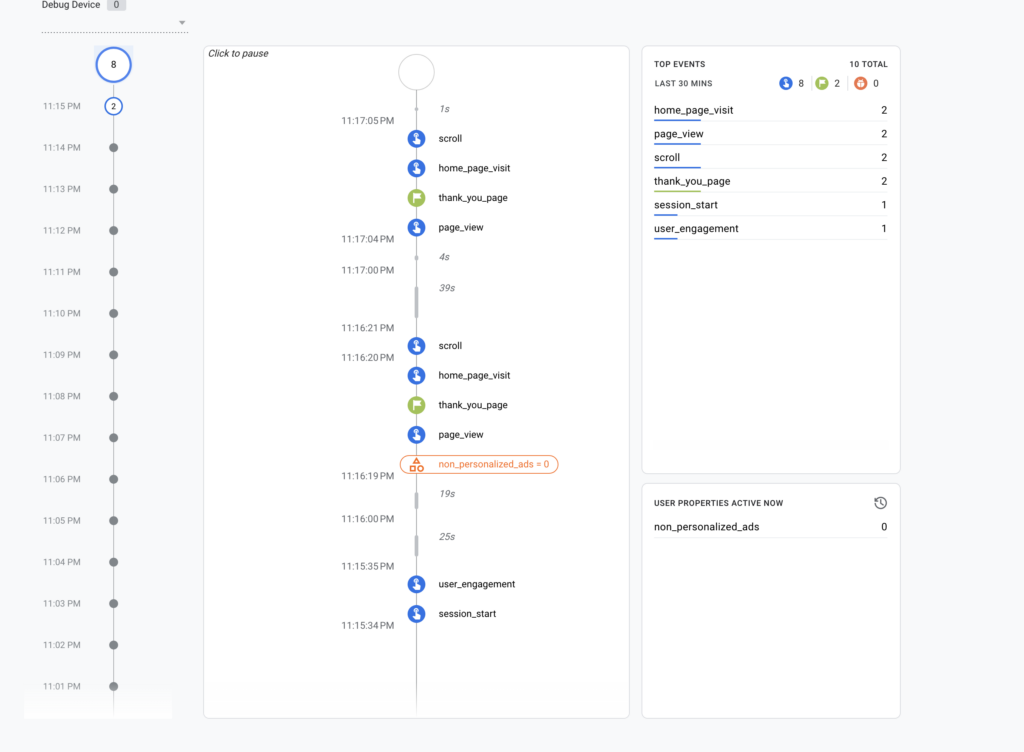
Figure 2: GA4 DebugView – Thank You Page Event Firing
Essay III. Summary of “Menu Click” Event Conversion
In addition to the Thank You page conversion, I implemented an event-centric conversion strategy by tracking a specific main menu interaction using Google Tag Manager. I created a custom GA4 event named menu_click and configured it to trigger when users click the “Thank You” link in the main navigation menu. Using GTM, I enabled built-in click variables, configured a “Just Links” trigger, and applied a condition where the trigger fires when the Click Text contains the relevant menu label. I also passed dynamic event parameters (link_text and link_url) to GA4 to enhance reporting granularity. After validating the implementation in GTM Preview mode and confirming the event fired successfully, I marked the event as a key event in GA4 to treat it as a conversion. This event-centric approach provides deeper behavioral insight by capturing intentional user navigation patterns, allowing analysis of engagement at the interaction level rather than relying only on page loads. It strengthens conversion measurement by linking navigation behavior to user intent and supports more refined funnel and path analysis in GA4 reporting.
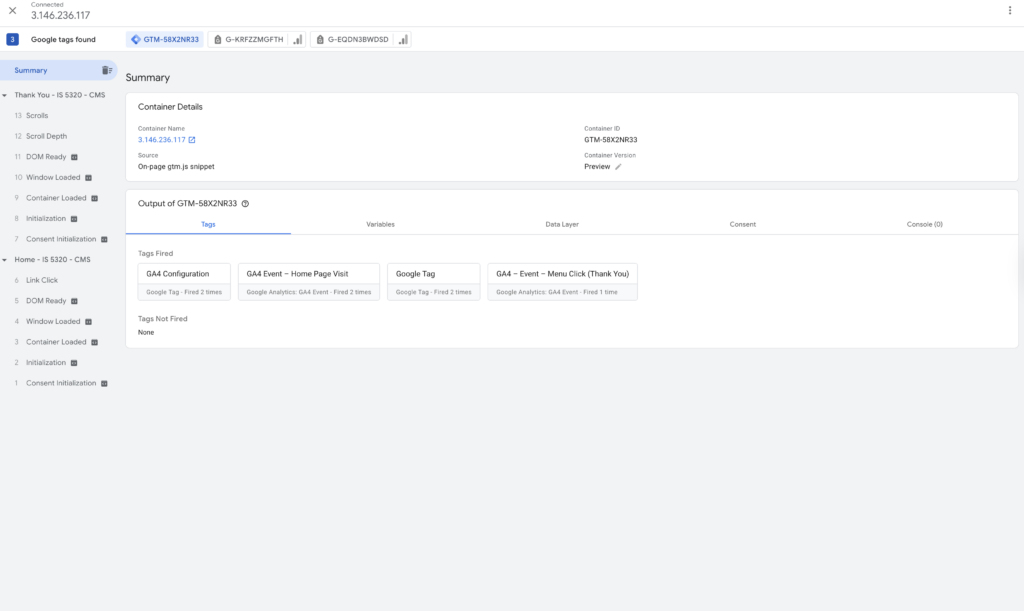
Figure 3. GTM Preview – Menu Click Event Successfully Fired
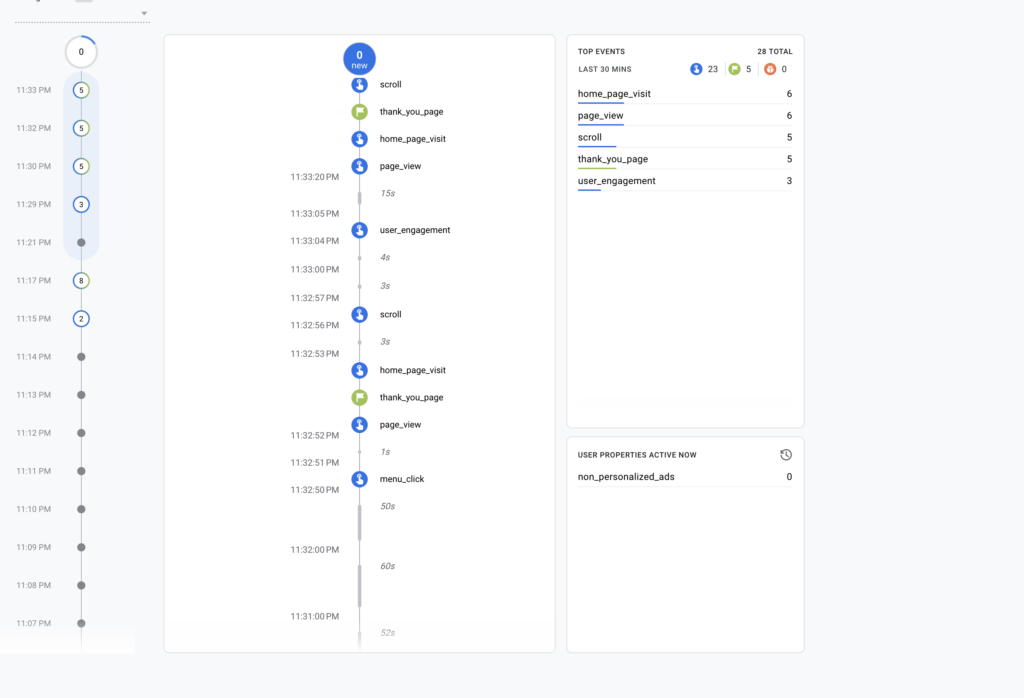
Figure 4. GA4 DebugView – Menu Click Event Received
References
Berman, Ron, and Zsolt Katona. “The Role of Search Engine Optimization in Search Marketing.” Marketing Science, vol. 32, no. 4, 2013, pp. 644–651.
Google Analytics Help. “About Events in Google Analytics.” Google, support.google.com/analytics/.
Google Tag Manager Help. “Set Up Google Analytics 4 Events.” Google, support.google.com/tagmanager/.
Kaushik, Avinash. Web Analytics 2.0: The Art of Online Accountability and Science of Customer Centricity. Sybex, 2010.
Montag, Christian, and Jon D. Elhai. “Discussing Digital Technology Overuse in Children and Adolescents.” Addictive Behaviors Reports, vol. 13, 2021.
Newport, Cal. Digital Minimalism: Choosing a Focused Life in a Noisy World. Portfolio, 2019.
Pew Research Center. Mobile Fact Sheet. Pew Research Center, 2023, www.pewresearch.org/internet/fact-sheet/mobile/.